Product case study
BaseDeck: a mobile-first way to manage a Supabase backend
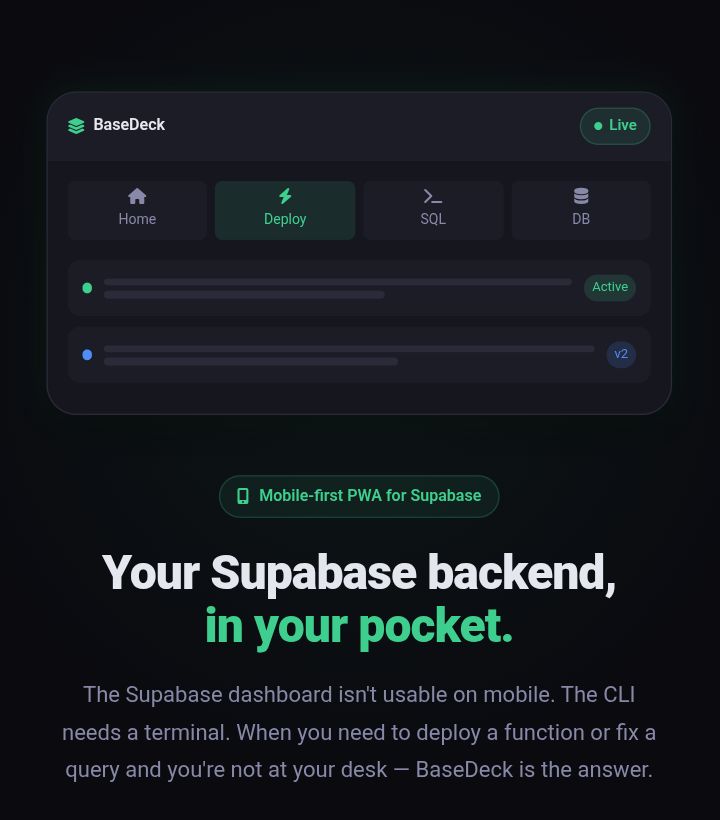
BaseDeck explores how selected backend tasks can become easier to inspect and manage from a mobile-friendly browser experience.
The problem
Developers and project owners do not always have a laptop or terminal available when they need to check a project. The usual backend tools are powerful, but they can be difficult to use comfortably on a phone. BaseDeck started from the question: what would a focused, mobile-first backend interface look like?
The product idea
BaseDeck brings selected Supabase workflows into a clearer browser experience. The product is designed around the tasks a person needs to understand and complete, rather than reproducing every possible developer control on a smaller screen.
Design decisions
- Prioritise readable summaries before dense technical detail.
- Make important actions discoverable without making destructive actions casual.
- Use responsive layouts that remain useful on a phone.
- Keep authentication and data access boundaries visible in the product architecture.
What I built
I worked across the product thinking, interface, and implementation needed to turn the idea into a usable tool. The project required balancing convenience with the security expectations that come with backend access. The result is a focused experiment in making technical workflows more approachable without pretending that mobile access removes the need for care.
What I learned
Good mobile product design is not only about shrinking a desktop layout. It is about deciding which information deserves attention first, which action belongs in the current context, and how to make risk visible. Those lessons also shape the way I approach business websites: clarity is a product feature.