Product case study
Circle Ledger: clearer records for community contributions
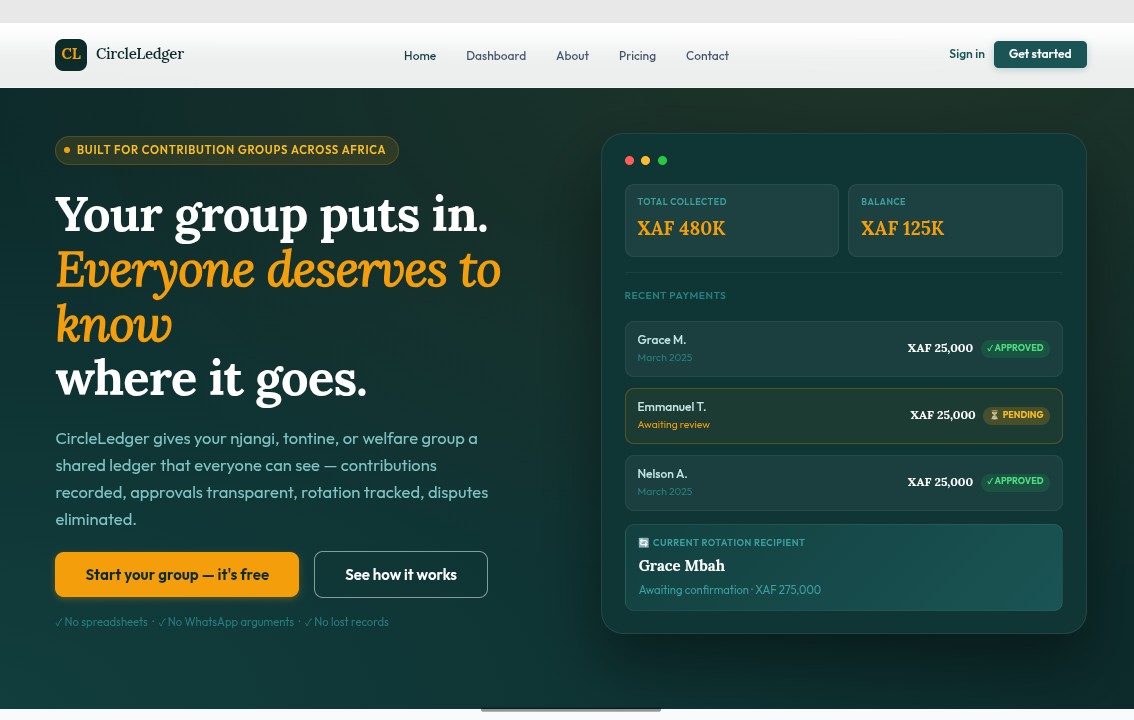
Circle Ledger explores a structured way for groups to keep contribution records easier to review, understand, and discuss.
The record-keeping problem
Contribution and savings groups often rely on scattered notes, memory, or informal messages. As activity grows, it becomes harder to answer simple questions: who contributed, when was it recorded, what is the current history, and which details need to be clarified?
The product concept
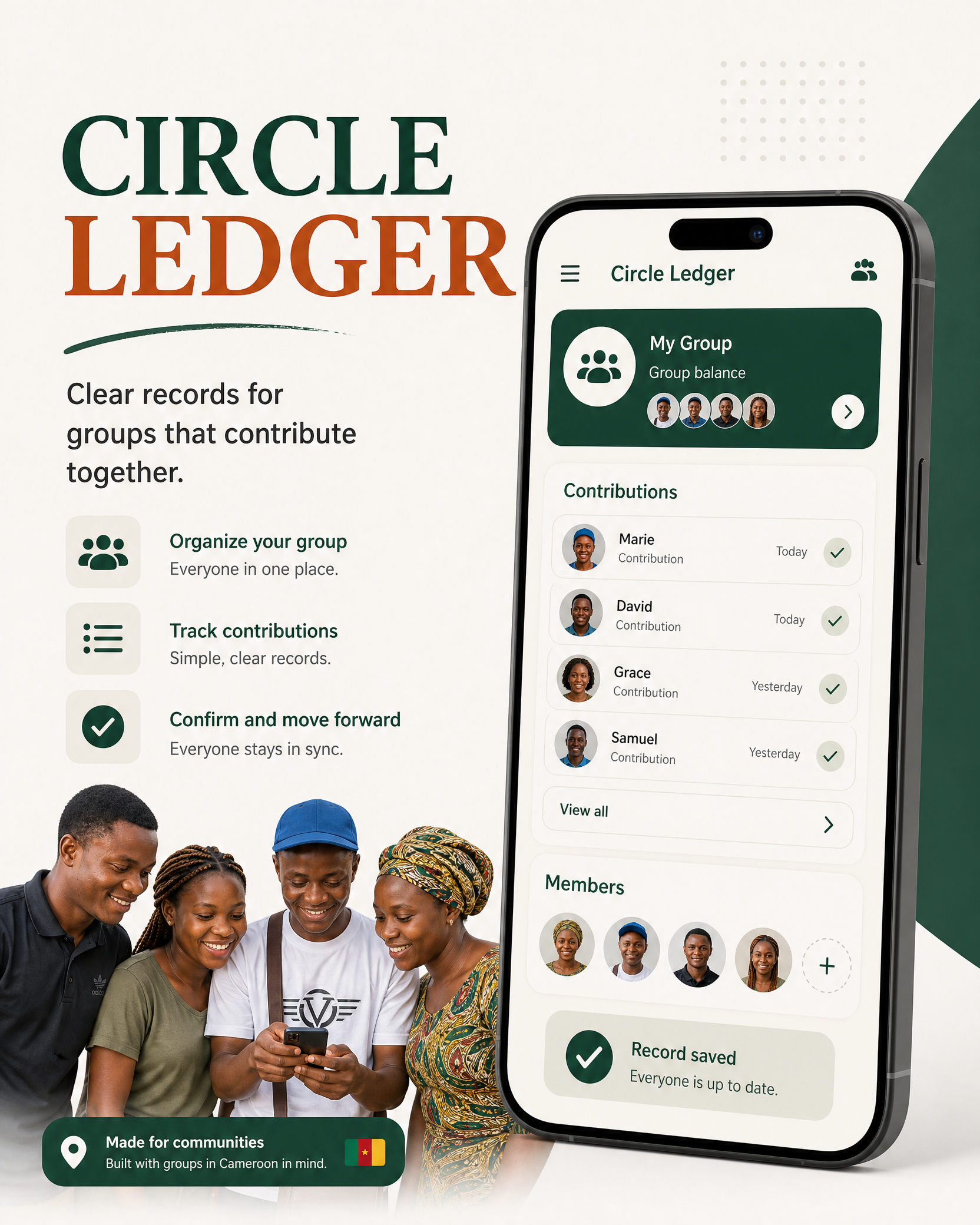
Circle Ledger brings those records into one clearer digital workflow. The aim is not to replace the relationships and trust within a group. It is to give those relationships a more dependable record to work from.
Product thinking
- Organise contribution history so it can be reviewed without reconstructing it from memory.
- Present important balances and records in language that is easier to understand.
- Keep the experience useful on mobile, where many group members will access it.
- Make the system’s scope clear instead of implying financial outcomes it cannot guarantee.
My role
I worked on the product direction, interface thinking, and implementation required to turn the record-keeping problem into a more focused digital experience. The project reinforced the importance of designing around the real conversation a product supports, not only around the data it stores.
What I learned
Tools for shared records have to respect both clarity and context. A useful interface can reduce confusion, but it should never hide the assumptions behind a record. That balance — making information simpler without making it misleading — is central to the way I build.